Showing posts with label probiotics. Show all posts

Saturday, January 21, 2012

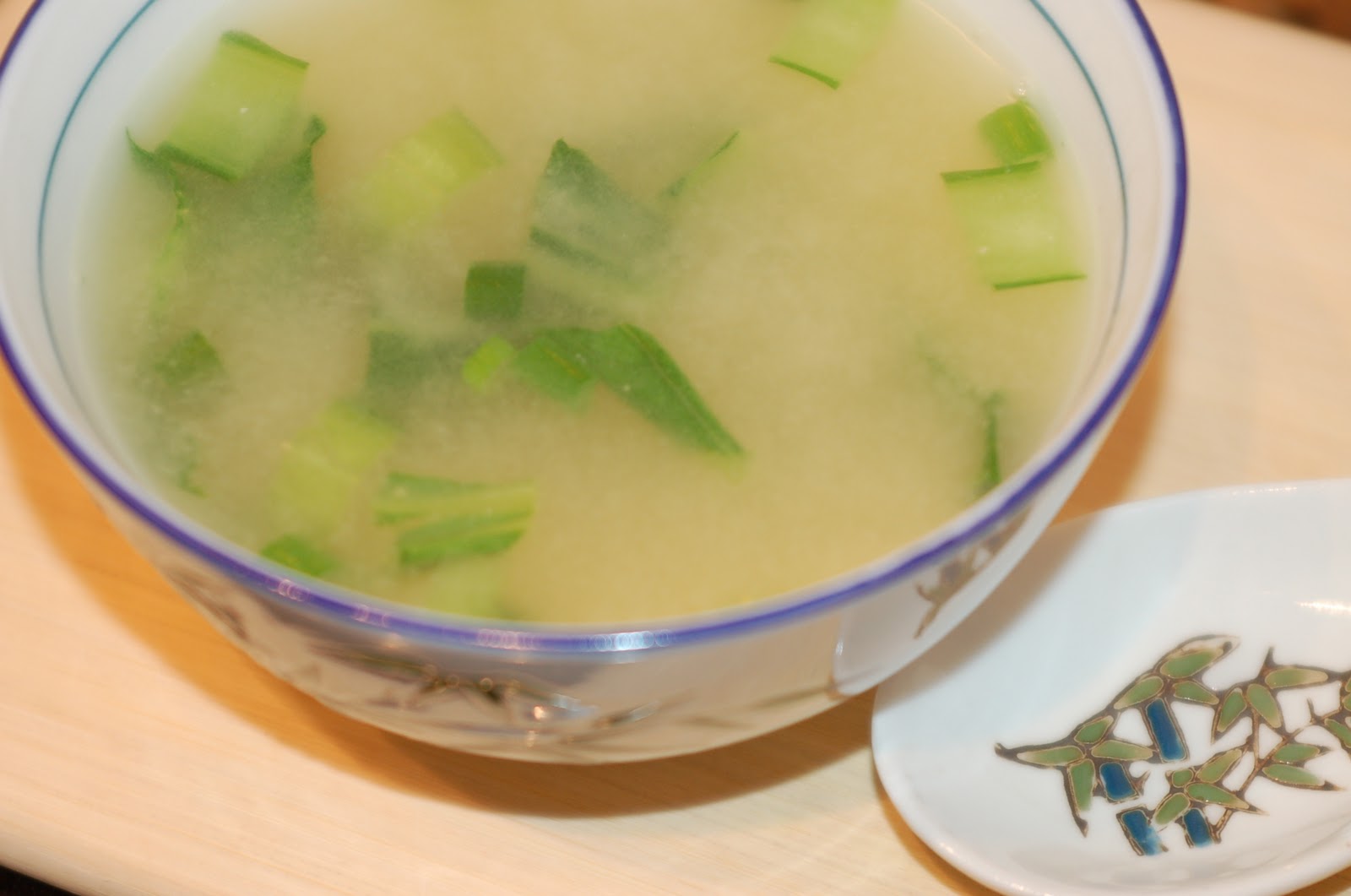
Easy Miso Soup

This is all organic, delicious, healthy, made with light Miso paste

I discovered this Miso Soup paste recently, and I must say, it tastes delicious even by itself! Whenever we go to an Asian restaurant, 2 of our daughters enjoy the Miso soup tremendously. I find satisfaction in knowing that I am able to make an organic version in my own home, any time. It is so easy that my daughters also can make it! You should be able to find this at any well stocked health food store.

Miso Master Light Miso Paste Ingredients: Organic Whole Soybeans, Organic Handmade Rice Koji, Sun-Dried Sea Salt, Blue Ridge Mountain Well Water, Koji Spores.
Aged 2 - 4 months.
Unpasturized


I dare say it is considered gluten free. It is made in a facility with barley, fyi. My daughter has an intolerance to gluten, not Celiac's disease, and this is perfectly fine for her.

The only 2 necessary ingredients (besides hot water!)


It looks like a thick hummus!

Here it is:

10 oz. of hot water, 2 Tbsp. Miso soup paste, 2 Tbsp. Better Than Bouillon paste (OR if you are lucky enough to have some bone broth or home made stock, use that instead. Just heat 10 oz. broth/stock then add the Miso soup paste.) Stir well. Enjoy!

*Note, do not put the miso paste into boiling water, only resting hot water, as the probiotic benefits will decrease.


Optional: Sliced baby bok choy and/or sliced scallions- add in at any point

Wednesday, December 14, 2011

Be Good to Your Gut!

Green Fed A2 type cows, grazing on thousands of organic pastures in southern Missouri produce this unique, extremely beneficial product, new to the market place. Can be delivered to your door!
Beyond Organic's GreenFed Raw Cheddar Cheese contains healthy probiotics
I have been told time and time again that my health starts with my digestive system. This makes a lot of sense to me since the average person has almost 30 feet of guts. Its the place where food enters and it's nutrients are supposed to be absorbed into the system. For those who suffer "IBS" symptoms (and let me preface by saying that I believe IBS is just a generalized dump-bucket term that some doctors choose to lean on), more than likely they will also have a "leaky gut" which is the lead culprit to the IBS symptoms. Leaky gut syndrome damage occurs to the lining of one's intestinal wall from repeated ingestion of foods containing gluten, certain medications, excessive alcohol, certain antibiotics, and other triggers. This damage leads to a permeability in the intestinal walls where toxins literally flow through the intestines into the blood stream rather than being moved along and voided. Having this condition causes many symptoms such as abdominal bloating, excessive gas and cramps, fatigue, food sensitivities, joint pain, skin rashes, and autoimmunity. 
Beyond Organic's dark organic chocolate contains toasted flax seed for Omega 3s, fiber, with probiotics and antioxidants. Who wants some chocolate?!


So, how to heal the gut from damage already done (or keep your gut running optimally and healthy)? PROBIOTICS! It is a simple way to help heal one's gut, keep things moving along, and put healthy flora (or healthy bugs/bacteria) back into the digestive system. Probiotics are a NECESSITY if one has ever been on antibiotics. Antibiotics kill ALL the bugs, good and bad. Probiotics must be taken after the last round of antibiotics have been taken in order to give the gut a chance to restore its normal flora. However, it is truly necessary to take probiotics at all times, and just up the intake after a round of antibiotics, sickness, or disease.


How probiotics benefit and help to heal the gut:


1. Boost your immunities and help fight against anything trying to "get" you
2. Increase bowel movement
3. Discourages overgrowth of "bad" bacteria
4. Reduces intestinal allergies
5. Helps alleviate "IBS", gluten intolerance symptoms
6. Produces nutrients in the lining of the gut 
7. Lessens occurrence of yeast

With our daughter suffering from gluten intolerance, our favorite way to get probiotics into our diet is by drinking Amasai, a living whole food. Here are the highlights of Amasai:
  • GreenFed - cattle intensely graze on organic grasses and greens - no grains
  • Cultured - with over 30 types of probiotics, making it an easy-to-digest, smoothie-like beverage
  • True Whole Milk - never skimmed, always teeming with protein, healthy fats and fat-soluble vitamins
For more information on how to have Amasai delivered to your door click here: organicformylife.com

Wednesday, November 9, 2011

Is a Cow's Milk Really Just for Baby Cows?

A2 Cattle from Jordan Rubin's "Beyond Organic" Ranch
As I sit down to write this, I have a plate of snacks to keep me motivated. On my dish are slices of an organic Granny Smith apple, organic crackers (I am a sucker for gluten, not an advocate), a glass of organic orange juice (again, I am human, my OJ is pasteurized and from a carton) and last, but certainly not least, a huge hunk of Monterey Jack cheese (not organic, because I cannot find any organic cheeses usually, but at the very least it's "hormone-free").
Raw Cheddar Cheese Wheels made from healthy, Green-Finished TM cows!

I was told by a naturopath to avoid gluten and dairy. NObody should be told these things in the same year, let alone in the same sentence! Some of you reading this are probably already gluten and/or dairy free eaters. Way to be! I mean that honestly. If you are able to satisfy your cravings without giving into or eating these two "food groups", then you are one step ahead of me. So, this is how I look at it. I am a foodie. There is really no getting around it. I LOVE FOOD. Until it affects me in an obvious way, I will push the envelope.

Dairy is a huge part of my food chain. So long as I have no health symptoms that are apparent from eating dairy, I will continue to do so. There are really only 2 schools of thought on cow dairy (you either think it's healthy or you don't) I have to say I have teetered on the fence over the last several years between the thought of whether it is healthy for us or not. I have read literature before that states cow milk is the closest to human milk in its properties.  When our oldest was done nursing from me (and there are some people now stating that even breast milk can be unhealthy, ugh), I thought I was being a health guru (pre-internet) by giving her rice and soy based milk in lieu of cow's milk. (Excuse me for a moment, I need to go get some more cheese) So, after the invention of the internet, it has come to my attention that rice milk offers nothing truly nutritious in value, I really don't know why I ever thought it would?  Soy milk is ok for those who don't have a history of breast cancer in their family, since it can disrupt hormones and cause some havoc. Soy does have a lot of protein. If you are of Asian descent, you are clear to drink it for the most part, it's a gene thing.

 There's goat milk, almond milk, sheep milk, hemp milk, coconut milk and more. All of these contain better health qualities than soy and rice, but definitely possess different flavors than cow milk. So, what's the 'problem' with drinking cow milk? Well, to start with, it's the cow that's the problem.

 Dr. Thomas Cowan (I am not making this up, there's something in a name)- has spent most of his career researching this debate on cows' milk- the cows' genetic make-up, how they are treated, fed, and how the milk is handled thereafter. In a nutshell here is the explanation on why most of the western world's cattle, including the United States are no good for most of us. They mostly hail from the A1 beta-casein gene pool (such as Holsteins). This is important to note because beta-casein also contains an amino acid called BCM-7, which is a powerful opiate linked to negative health effects such as diabetes 1, heart disease, auto-immune diseases, and more. Where as the A2 cows, from more ancient blood lines are more healthy and favorable. The A2 type cows (which the proteins are very close to sheep and goat's milk) are very rarely found in the U.S., but if you are lucky to find a farmer with Jersey cows, they are A2 type. You are even luckier if this farmer sells you the milk raw  so you can reap its full benefits.
Jordan Rubin's pastures in Missouri