Showing posts with label dairy healthy. Show all posts

Tuesday, February 14, 2012

CAFOs (Concentrated Animal Feeding Operations) and what you NEED to know about them


Chickens forced to live on top of each other in dirty conditions for their entire lives
CAFOs (a.k.a. factory farmed) is an acronym for Concentrated Animal Feeding Operations. Let's explore it more, in detail, with a Q & A format:

Q: What qualifies a farm as a CAFO?
A: The Environmental Protection Agency (EPA) defines a CAFO as "new and existing operations which stable or confine and feed or maintain for a total of 45 days or more in any 12-month period more than the number of animals specified" in categories that they list out. In addition, "there's no grass or other vegetation in the confinement area during the normal growing season." 
Cows in a CAFO

Q: What exactly goes on in a CAFO?
A: Unnaturally large numbers of animals are reared and confined closely together. Cattle feedlots generally contain thousands of animals in one place, while many egg-laying businesses house one million or more chickens. Also:
  • Metal buildings confine animals indoors, with minimal room for normal behaviors and little or no access to sunlight and fresh air.
  • Animals are mutilated to adapt them to factory farm conditions. This includes cutting off the beaks of chickens and turkeys (de-beaking), and amputating the tails of cows and pigs (docking) and teeth pulling which can send these animals into shock then death.
  • Pens and cages restrict the natural behavior and movement of animals. In some cases, such as veal calves and mothering pigs, the animals can’t even turn around.
  • Chicken processors kill about 5,000 chickens per hour and are forced to disregard hygiene because of lack of time and often just return bodies dropped on the floor to the processing line.
  • Thousands of turkeys are crammed into filthy sheds after their beaks and toes are burned off with a hot blade. Many are still conscious when they are plunged into the scalding water of the de-feathering or hair-removal tanks. This degrades the quality of their meat.
  • Cattle and cows are disbudded. Disbudding is destroying the buds on top of the heads of dairy and beef calves and young goats to prevent the growth of their horns – usually done with a hot iron.

Q: Why would a farmer choose to raise his (chickens, pigs, cows, etc.) animals in a CAFO?
A: To produce as much meat, eggs, or milk at the lowest possible cost, thereby creating a more substantial income for the farmer
Pigs in a CAFO

Q: What is the environment like in a typical CAFO?
A: Not much better than these scenarios: *Shame on Smithfield Farms
AND Shame on Perdue  *WARNING- very graphic videos

Q: Are meats, dairy, eggs and other bi-products of CAFO reared animals unhealthy for us to consume?
A: You be the judge:
*The force-feeding of cattle corn, GMO corn and GMO soy cause the cattle to experience acidosis within 180 days. Corn-fed cattle are also prone to serious health conditions such as bloat, diarrhea, ulcers, liver disease, abscesses and a weak immune system.
 *Most independent scientists and researchers agree that a grass-fed diet would eliminate 80% of the E. coli in the cow’s digestive tracts. Feeding cattle corn causes E. coli. The problem is so severe that fast food chains like McDonald’s buy hamburger containing ammonia to stop the spread of E. coli from sick animals. (I recently heard McDonald's is going to stop this practice, supposedly, but I wonder what they will use instead of ammonia?)
* Grass-fed beef is significantly higher in calcium, magnesium, beta-carotene, omega-3 and potassium than corn-fed beef. Corn-fed cattle have been found to contain only 15 to 50% as much omega-3 as meat from grass-fed cattle. Grass-fed beef is also four times higher in vitamin E and lower in polyunsaturated fats. Corn-fed cattle are high in bad omega-6 which leads to cancer and heart disease.Current research tells us that Omega-6 fatty acids are the cause of many of our Western diseases, including cardiovascular disease, cancer, inflammatory and autoimmune diseases.
*Almost 10 billion chickens, turkeys and ducks are slaughtered under even worse conditions than cattle each year for their meat. Then, Tyson Foods for example, pump up their chickens with salt brine containing MSG to make them plumper and taste better.
CAFO impacts on our environment in several ways

Q: How does a CAFO impact our environment negatively?
A: Mismanagement of waste can do harm in these ways, to name just a few:
CAFO "lagoon"
Sludge created by CAFOs
  • Excessive waste created by large concentrations of animals is handled in ways that can pollute air and water. Here is one example: Concrete floors and damp conditions often lead to laminitis or hoof disease causing of lameness in cattle requiring spraying the cattle with antibacterials. Laminitis leads to inflammation and infections requiring more antibiotics and in many cases, Formalin and Cu sulphate, which are toxic to humans and water.
  • Excess nitrates, heavy metals (zinc, copper, arsenic, nickel, manganese, and selenium) and other contaminants also pose a risk to humans, wildlife and migratory birds. Factory farms harm about 20% of endangered and threatened species.
  • Man-made lagoons on industrial farms hold millions of gallons of liquid waste, from which contaminants can leach into groundwater. The manure is normally sprayed on crops, but often excessively, leading it to run off into surface waters.
  • Nutrients and bacteria from waste can contaminate waterways, killing fish and shellfish and disturbing aquatic ecosystems.
  • And one very important result:  The loss of more than two-thirds of our Nation’s top soil. There is no crop rotation as a result of the use of GMO Bt corn as feed. Most independent scientists, researchers and traditional farmers assert that the erosion of top soil will have catastrophic effects on our farms and ability to grow food in the future. However, Monsanto uses its IP rights to control who tests their biotech products and to squash any negative research and studies by independent farmers and researchers.
Q: About how many CAFOs are there in the US?
A: I could not find an up to date, true statistic, however I have read up to 99% is estimated. I would bet that the majority of our dairy, meat, eggs, and poultry do indeed come from CAFOs, unfortunately.

Q: What are some companies who buy their meat from CAFOs?
A: Tyson, Perdue and Smithfield to name a few top producers. And, don't forget the big chain franchises (McDonald's, KFC, Taco Bell, etc....) How else is McDonald's the biggest buyer/seller of beef? It's not by buying farm ranched cattle and farm raised chickens. I saw the recent commercial the McDonald's has put out with a real "Cowboy" at his ranch. He may be ONE of the producers of McDonald's beef, but he certainly cannot be the only one.  I'd love a tour of his ranch to see how his cattle are reared.
Humanely raised, happy chickens

Q: But what about Perdue's labeling and advertising stating that their chickens are fed an all vegetarian diet, cage free, as well as being hormone and anti-biotic free?
A: It is against the law to administer hormones to chickens and it has been for over 50 years. So, that's just tooting a horn for no reason, really. The vegetarian diet Perdue boasts about is made up of corn, soy beans, and marigolds. The corn and soy beans are highly likely from GMO seeds. Marigolds are fed to the chickens to add color to their meat (no wonder it has a yellow-orange hue sometimes!), but I will not argue that feeding marigolds to the chickens is a bad thing. Organically grown marigolds would be ideal, but I can guarantee these chickens would not be eating organically certified anything or Perdue would be certain to put that on their label too. Regarding cage free, I am sure they are not confined to cages, however, it is quite a broad claim as Perdue states: "We are committed to creating safe living conditions for our chickens and ensure that they have free access to food and water. By raising our chickens inside, we can ensure that they are protected from the elements, predators and disease. They are not confined or raised in cages."  END QUOTE.
So, the chickens are raised inside buildings, likely crowded together (not unlike a CAFO), in unnatural surroundings. I think it's sad that Perdue feels they can trick Americans with their advertising and marketing schemes.


Notice the corn, Perdue's main "vegetarian feed" and what is "Process Verified" anyway??????


Q: What should I be looking for when buying dairy, eggs, poultry and meats?
A: Look for pasture and humanely raised, free range, grass fed (and ideally grass or green finished), organic, no hormones or anti-biotics, and preferably local farms. Most major grocers carry at least organic options and some go even a step further with the pasture raised on organic greens on small, happy farms. Your health food stores should have even better options.
Humanely raised, happy cattle

Q: What can I do to limit eating meats, dairy, eggs, and poultry that originate from a CAFO?
A: The best way, if you have the resources, is to buy local. Do an online search in your area for local beef and dairy farmers, chicken and egg farmers, etc. Go visit their farm, see how they rear their animals and what the conditions are like. If you cannot do this but you are able to purchase on line, there are many great farms that are now providing their meats, cheeses, and more, to be shipped directly to you (including Beyond Organic, here). Then, as mentioned previously, try your major grocer or health food stores.

Wednesday, January 11, 2012

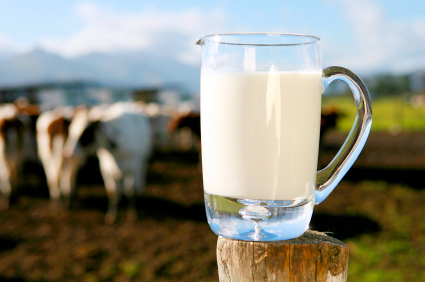
Raw Milk Vs. Pasteurized

There is always more than one way to approach anything. Problem solving 101. Some issues that seemingly cannot be resolved, really could be, if there were more effort and thought put into it.  In regards to raw cow milk, the biggest debate seems to be whether or not it should be legalized in all 50 states. As of last year, raw milk sales were legal in 10 U.S. states, illegal in 11 states, and all the rest were legal with caveats, such as "for pet consumption only" or "for farm sales". One way that states, such as New York, are getting around the law is to sell shares. Quarterly, each share holder pays money towards the "ownership" of dairy cattle at a raw dairy farm. Because these share holders technically own their own cows, they would be allowed to drink the milk from said cows.

So why the division? Well, let us explore first,

What is Pasteurization?


Pasteurization (named after Louis Pasteur, who discovered it) is a process of bringing a liquid up to just below boiling point, for a period of time, to kill any potential harmful organisms (E. Coli, salmonella, etc.), then bringing back down to a cool, stable temperature. 

Bottom line, advocates of pasteurization feel that "Raw milk can harbor dangerous micro-organisms that can pose serious health risks to you and your family."- The FDA.

So, the raw milk fans rebuttal goes like this: "It is POSSIBLE for raw milk to harbor dangerous micro-organisms, but it is possible for ANY food, raw or pasteurized, to harbor dangerous micro-organisms. We do not advocate drinking unpasteurized milk from modern Holsteins, bred to produce high volumes of milk, injected with recombinant Bovine Growth Hormone (rBGH), and raised in commercial feedlots where they are crowded and stressed and given antibiotics to keep them from being sick. That milk DOES need to be pasteurized to lessen (not eliminate) the possibility of food-borne illness. We advocate the drinking of raw milk from old-fashioned breeds of cows raised on pasture, with plenty of green grass, sunshine, and room to move. Properly raised and milked in clean conditions, this milk is extremely unlikely to harbor dangerous micro-organisms...in fact, less likely than commercial, pasteurized milk.  Also note the second comment below regarding the relative safety of ALL dairy compared to other foods." - RawMilk.com

I found a great Farm in Pennsylvania (I wish they delivered to my house a thousand miles or so away!) that offers certified organic, raw milk from Jersey cows. They have a great little story and a great explanation on why what they offer is superior, check it out here: Your Family Cow

Here is a comparison chart on what raw milk advocates would like most of us to know regarding differences in what the FDA is considering raw milk and what responsible, knowledgeable farmers consider raw milk:


CONDITIONS AFFECTING RAW MILK QUALITY
THE OTHER RAW MILK PRODUCED FOR DIRECT CONSUMPTION
RAW MILK PRODUCED FOR PASTEURIZATION
Diet Base (1)
Grass-based diet promotes alkaline conditions conducive to beneficial organisms
Grain-based diet promotes acid conditions conducive to pathogenic organisms
Living Environment (2)
Mostly on pasture
and natural grains
Mostly confined
Additional Intervention (3)
Rarely used
Bovine growth hormones
and antibiotics
Life Span (4)
12+ years
3.5 years
Nutritional Quality (5)
5 to 6 times more CLA
Higher vitamin content
Vitamin D from the sun
Minimal CLA
Farmer's family consumes the milk (6)
YES
NO
Consumer Willing to Pay a Premium Price
YES
NO


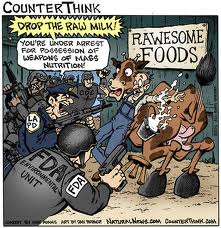
After considering the chart, it appears as though raw milk advocates agree with the FDA, that the milk on 99% of supermarket shelves ought to be pasteurized. All the raw milk advocates want is to be able to legally consume and sell for human consumption, healthy, properly handled, raw milk. Why can't the FDA form a regulatory entity that can supervise raw milk dairy farmers and allow raw milk, in its healthiest form to be sold?
Since when does the FDA REALLY care about our health anyway?


Here is more information I found on processed dairy: "Processed dairy is any dairy that has been altered from its raw state by heating the dairy above a cow's body temperature. Pasteurization, irradiation, boiling or homogenization are the most commonly known forms of processing. Also, the processes of chemical treatment are used to enhance flavor, fortify and preserve bad-tasting milk that has been heat-treated and putrefactive. The common store type of milk is processed to the extent it turns blue. They add large amounts of dolomite (mined calcium carbonate, that is rock) to make it white and add irradiated hydrogenated vegetable oil as Vitamin D. Hydrogenated oil has the same molecular structure as plastic unlike natural raw milk." www.RawMilk.org

The process of pasteurization not only kills "bad" stuff, it kills the good stuff too. Assuming one were to pasteurize the milk of a truly healthy cow, handled properly, one would only be ridding the milk of it's benefits. The pasteurization process removes vitamins, minerals and enzymes from the raw milk and kills friendly bacteria may help with digestion and strengthen your body's immune system. What is more is that people who are lactose intolerant can usually tolerate raw milk. There is little difference in the taste of raw vs. pasteurized milk.

Here's the thing (through my eyes), no two cows, farmers, farms, pastures, conditions, or whatever, are going to be equal in health, genetic superiority, or handling. So, it seems, we have many variables that go into the end product, milk.

Some people are immune compromised and are strictly told not to eat raw dairy products. I can understand that philosophy. I also understand that immune compromised people, and even those of us who are blessed enough to be healthy, can come in contact with harmful organisms through SO many foods (spinach, cantaloupe, hamburger, sushi, eggs, to name a few common culprits).


I love that he has some "leftovers" on his nose!

If you are lucky enough to know of a dairy farmer (Jersey cows, or any ancient A2 breed) who sells raw milk, and you can visit the farm any time, I would recommend it rather than the carton off the shelf at your grocer. This is strictly my opinion based on my own research. If you drink cows' milk, I  would love to hear what type you drink and why?

Wednesday, December 14, 2011

Be Good to Your Gut!

Green Fed A2 type cows, grazing on thousands of organic pastures in southern Missouri produce this unique, extremely beneficial product, new to the market place. Can be delivered to your door!
Beyond Organic's GreenFed Raw Cheddar Cheese contains healthy probiotics
I have been told time and time again that my health starts with my digestive system. This makes a lot of sense to me since the average person has almost 30 feet of guts. Its the place where food enters and it's nutrients are supposed to be absorbed into the system. For those who suffer "IBS" symptoms (and let me preface by saying that I believe IBS is just a generalized dump-bucket term that some doctors choose to lean on), more than likely they will also have a "leaky gut" which is the lead culprit to the IBS symptoms. Leaky gut syndrome damage occurs to the lining of one's intestinal wall from repeated ingestion of foods containing gluten, certain medications, excessive alcohol, certain antibiotics, and other triggers. This damage leads to a permeability in the intestinal walls where toxins literally flow through the intestines into the blood stream rather than being moved along and voided. Having this condition causes many symptoms such as abdominal bloating, excessive gas and cramps, fatigue, food sensitivities, joint pain, skin rashes, and autoimmunity. 
Beyond Organic's dark organic chocolate contains toasted flax seed for Omega 3s, fiber, with probiotics and antioxidants. Who wants some chocolate?!


So, how to heal the gut from damage already done (or keep your gut running optimally and healthy)? PROBIOTICS! It is a simple way to help heal one's gut, keep things moving along, and put healthy flora (or healthy bugs/bacteria) back into the digestive system. Probiotics are a NECESSITY if one has ever been on antibiotics. Antibiotics kill ALL the bugs, good and bad. Probiotics must be taken after the last round of antibiotics have been taken in order to give the gut a chance to restore its normal flora. However, it is truly necessary to take probiotics at all times, and just up the intake after a round of antibiotics, sickness, or disease.


How probiotics benefit and help to heal the gut:


1. Boost your immunities and help fight against anything trying to "get" you
2. Increase bowel movement
3. Discourages overgrowth of "bad" bacteria
4. Reduces intestinal allergies
5. Helps alleviate "IBS", gluten intolerance symptoms
6. Produces nutrients in the lining of the gut 
7. Lessens occurrence of yeast

With our daughter suffering from gluten intolerance, our favorite way to get probiotics into our diet is by drinking Amasai, a living whole food. Here are the highlights of Amasai:
  • GreenFed - cattle intensely graze on organic grasses and greens - no grains
  • Cultured - with over 30 types of probiotics, making it an easy-to-digest, smoothie-like beverage
  • True Whole Milk - never skimmed, always teeming with protein, healthy fats and fat-soluble vitamins
For more information on how to have Amasai delivered to your door click here: organicformylife.com

Wednesday, November 9, 2011

Is a Cow's Milk Really Just for Baby Cows?

A2 Cattle from Jordan Rubin's "Beyond Organic" Ranch
As I sit down to write this, I have a plate of snacks to keep me motivated. On my dish are slices of an organic Granny Smith apple, organic crackers (I am a sucker for gluten, not an advocate), a glass of organic orange juice (again, I am human, my OJ is pasteurized and from a carton) and last, but certainly not least, a huge hunk of Monterey Jack cheese (not organic, because I cannot find any organic cheeses usually, but at the very least it's "hormone-free").
Raw Cheddar Cheese Wheels made from healthy, Green-Finished TM cows!

I was told by a naturopath to avoid gluten and dairy. NObody should be told these things in the same year, let alone in the same sentence! Some of you reading this are probably already gluten and/or dairy free eaters. Way to be! I mean that honestly. If you are able to satisfy your cravings without giving into or eating these two "food groups", then you are one step ahead of me. So, this is how I look at it. I am a foodie. There is really no getting around it. I LOVE FOOD. Until it affects me in an obvious way, I will push the envelope.

Dairy is a huge part of my food chain. So long as I have no health symptoms that are apparent from eating dairy, I will continue to do so. There are really only 2 schools of thought on cow dairy (you either think it's healthy or you don't) I have to say I have teetered on the fence over the last several years between the thought of whether it is healthy for us or not. I have read literature before that states cow milk is the closest to human milk in its properties.  When our oldest was done nursing from me (and there are some people now stating that even breast milk can be unhealthy, ugh), I thought I was being a health guru (pre-internet) by giving her rice and soy based milk in lieu of cow's milk. (Excuse me for a moment, I need to go get some more cheese) So, after the invention of the internet, it has come to my attention that rice milk offers nothing truly nutritious in value, I really don't know why I ever thought it would?  Soy milk is ok for those who don't have a history of breast cancer in their family, since it can disrupt hormones and cause some havoc. Soy does have a lot of protein. If you are of Asian descent, you are clear to drink it for the most part, it's a gene thing.

 There's goat milk, almond milk, sheep milk, hemp milk, coconut milk and more. All of these contain better health qualities than soy and rice, but definitely possess different flavors than cow milk. So, what's the 'problem' with drinking cow milk? Well, to start with, it's the cow that's the problem.

 Dr. Thomas Cowan (I am not making this up, there's something in a name)- has spent most of his career researching this debate on cows' milk- the cows' genetic make-up, how they are treated, fed, and how the milk is handled thereafter. In a nutshell here is the explanation on why most of the western world's cattle, including the United States are no good for most of us. They mostly hail from the A1 beta-casein gene pool (such as Holsteins). This is important to note because beta-casein also contains an amino acid called BCM-7, which is a powerful opiate linked to negative health effects such as diabetes 1, heart disease, auto-immune diseases, and more. Where as the A2 cows, from more ancient blood lines are more healthy and favorable. The A2 type cows (which the proteins are very close to sheep and goat's milk) are very rarely found in the U.S., but if you are lucky to find a farmer with Jersey cows, they are A2 type. You are even luckier if this farmer sells you the milk raw  so you can reap its full benefits.
Jordan Rubin's pastures in Missouri